

Schudtafel
 |
 |
 |
Productoverzicht
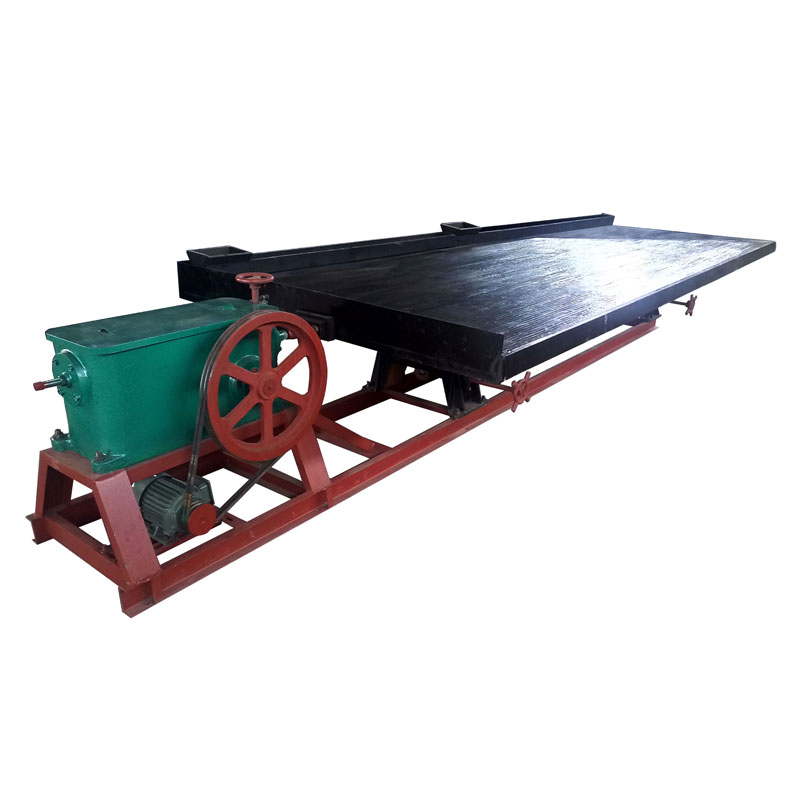
The beneficiation process of the shaker is carried out on the inclined bed surface with repeated strips. The ore particles are sent from the feed trough at the corner of the bed surface, and the transverse washing water is supplied to the feed trough. Under the action of gravity, the transverse water impulse, the inertia and friction caused by the reciprocating asymmetric movement of the bed surface, the ore particles are stratified according to specific gravity and particle size. The longitudinal motion along the bed surface and the transverse motion along the inclined bed surface are made. Therefore, the ore particles with different specific gravity and particle size gradually fan down in their respective direction of movement, respectively from different areas of theconcentrate end and tailings side, and finally are divided into concentrate, ore and tailings.The outstanding advantage of 6-S shaker is that the separation accuracy is high, and the final concentrate, middle ore and waste tailings can be obtained after a single separation, and multiple products can be obtained at the same time. The concentration ratio of concentrate is high, the sorting efficiency is high, the care is easy, and the stroke is easy to adjust.
Het werkende principe
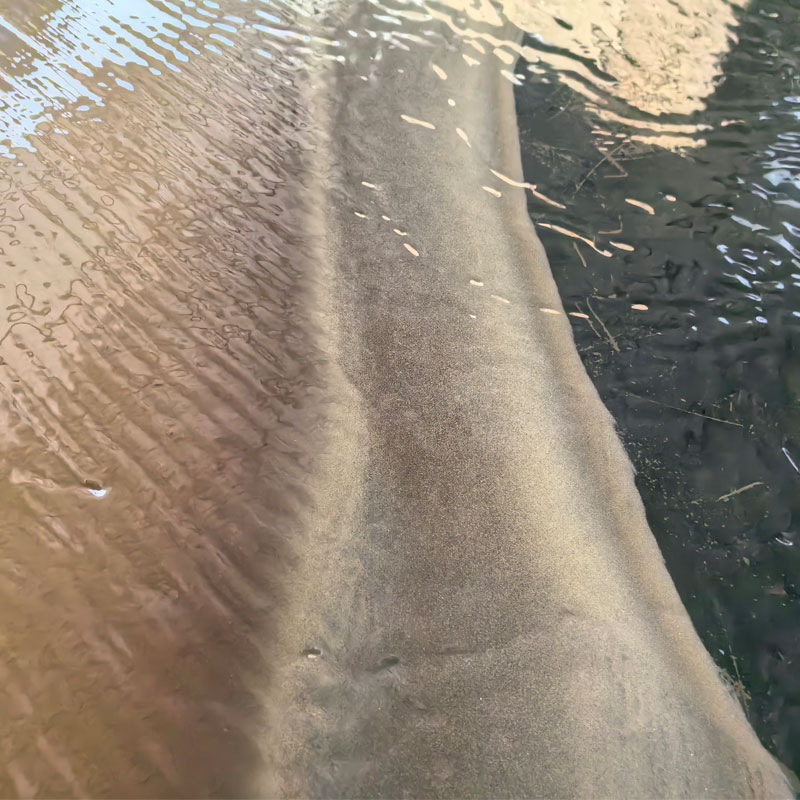
Shaker sorting is realized under the joint action of bed shaking and transverse water flow. Bed bed strips are longitudinal and the direction of water flow is close to vertical. When water flow crosses each bed strip laterally, eddy currents are formed in the groove. The combined action of eddy currents and bed shaking can loosen the mineral sand layer and stratify it according to density. The upper light ore particles are subject to the greater impulse of the water flow, while the lower heavy ore particles are subject to the lesser impulse, so the transverse movement speed of the light ore particles on the bed is greater than that of the heavy ore particles on the bed. This process is called "de lamination".

In de longitudinale richting, de differentiële beweging van het bedoppervlak, eerst met een langzame snelheid en versnelt geleidelijk, tot de maximale snelheid wanneer het plotselinge retraite, de snelheid geleidelijk afneemt tijdens het retraite -proces, en vervolgens het bovenstaande proces herhaal, niet alleen de losse stratificatie van de lagen van de ertsen, de longtheeltjes in een grotere snelheid, zodat de lichte speedjes in een grotere snelheid van de lichte speed. Waar de ertsdeeltjes gaan, hangt af van de combinatie van longitudinale snelheid en transversale snelheid. Zware mineralen hebben een kleinere transversale snelheid en grotere longitudinale snelheid, en lichte mineralen hebben een grotere transversale snelheid en kleinere longitudinale snelheid.
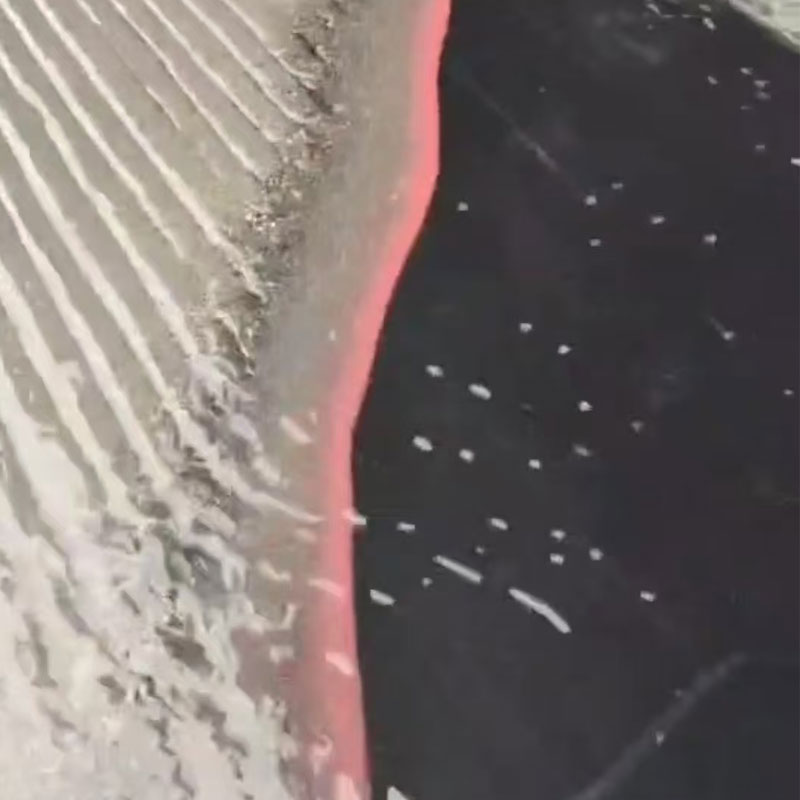
Applying the parallelogram rule to synthesize the longitudinal velocity and transverse velocity, it can be seen that the combined velocity of heavy minerals is inclined to the concentrate end of the shaker, light minerals are inclined to the tailings side of the shaker, and medium density particles are located between the two. This process is called "transport banding".Since the height of the bed is gradually reduced along the longitudinal direction of the self-driving end, the stratified ore particle groups in the groove are continuously stripped off during the movement to the concentrate end.
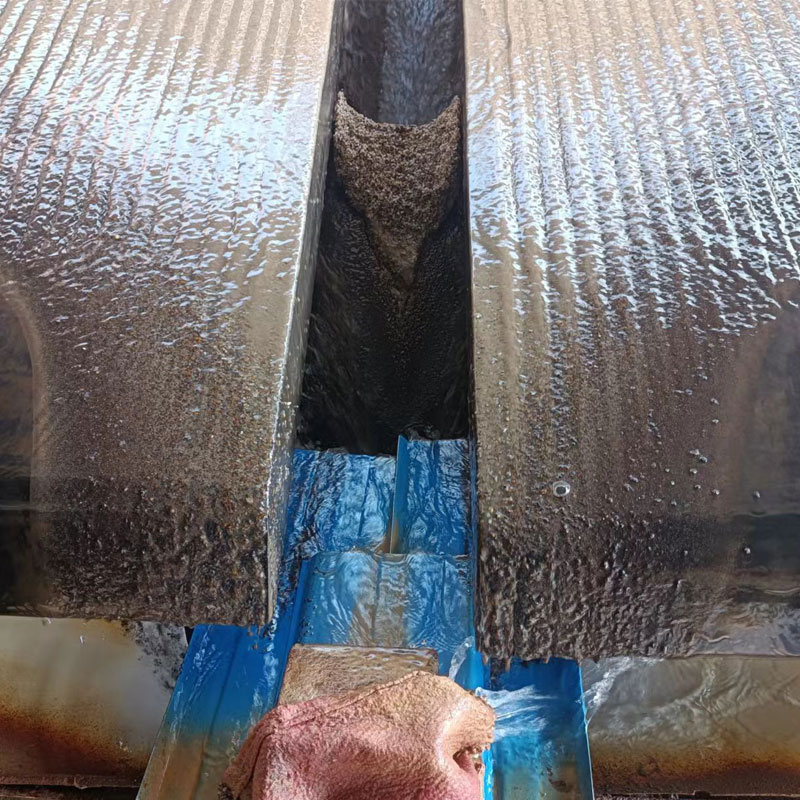
De lichte mineralen in de bovenste laag van de groef worden eerst uitgekleed en naar de residuenzijde verplaatst langs de horizontale richting van het bedoppervlak, en de zware mineralen worden uit het concentraatuiteinde ontladen. Daarom vertonen de mineralen op het hele bedoppervlak een ventilatorverdeling volgens verschillende zwaartekracht en verschillende deeltjesgrootte, om een verscheidenheid aan producten te verkrijgen.
The concentrate strip is washed by transverse water flow in the smooth area of the bed surface (no bed strip area), so that a few gangue particles mixed in it are washed out, and the grade of the concentrate is further improved.
Productvideo